EONS LEARNING

  • Home
  • About Us
  • Classroom
    • Resources >
      • Study Skills
      • Periodic Table
      • Common Ion Sheet
      • The Scientific Method
      • Doing Background Research
    • Introduction and Course Philosophy
    • Unit 1: Beginning Chemistry >
      • Lesson 1: The Atom >
        • What is an Atom?
        • The Structure of Atoms
        • The Periodic Table
        • Modeling Atoms
      • Lesson 2: Chemical Bonding >
        • Why Do Atoms Form Bonds?
        • Ionic Bonding
        • Covalent Bonding
        • Intermolecular Attraction
      • Lesson 3: Chemical Nomenclature >
        • Octet Rule
        • Ionic Compounds
        • Covalent Molecules
      • Lesson 4: Molecular Molecules >
        • Modeling Ionic Compounds
        • Modeling Covalent Molecules
      • Lesson 5: States of Matter >
        • States of Matter
        • Phase Changes
      • Lesson 6: Density >
        • What is Density?
        • Calculating Density
      • Lesson 7: Thermodynamics >
        • Temperature
        • Heat
        • Gas Laws
      • Lesson 8: Solution Chemistry >
        • Diffusion
        • Solutions and Molarity
        • Semi-Permeable Membranes
      • Lesson 9: Thermal Expansion >
        • Thermal Expansion
    • Unit 2: Earth Science >
      • Lesson 10: Earth at a Glance >
        • Perspective
        • Maps
      • Lesson 11: Layers of the Earth >
        • Layers of the Earth
      • Lesson 12: Plate Tectonics >
        • Plate Tectonics
      • Lesson 13: Rocks and Minerals >
        • Rocks and Minerals
      • Lesson 14: Particle Sorting >
        • Differentiation
        • Deposition of Sediment
      • Lesson 15: The Atmosphere >
        • Composition of the Atmosphere
        • Layers of the Atmosphere
        • Change Over Time
        • Atmospheric Disruption
    • Unit 3: The Cell >
      • Lesson 16: Life >
        • What is Life?
        • Structural Hierarchy of Living Things
      • Lesson 17: Biochemistry >
        • Intro to Biochemistry
        • Water
        • Micromolecules
        • Energy, Carbohydrates, Lipids
        • Protein and Nucleic Acid
      • Lesson 18: Cells >
        • What are Cells?
        • Microscopy
        • Plant and Animal Cells
      • Lesson 19: Membrane Transport >
        • A Special Environment
        • The Structure of Membranes
        • Membrane Transport
      • Lesson 20: Energy and Cell Respiration >
        • Energy in Biology
        • Energy Diagrams
        • Glycolysis and Anaerobic Respiration
        • Aerobic Cellular Respiration
      • Lesson 21: Photosynthesis >
        • Plants Get Energy From The Sun
        • Photosynthesis Process
        • Energy, Ecosystems, and the Environment
    • Unit 4: Anatomy and Physiology >
      • Lesson 22: The Human Body >
        • What Are Bodies Made Of?
        • What Do Bodies Do?
      • Lesson 23: The Nervous System >
        • The Nervous System
        • Neuronal Communication
        • The Central Nervous System
      • Lesson 24: The Endocrine System >
        • The Endocrine System
        • Hormones
        • Hormones, Puberty, and Reproduction
      • Lesson 25: The Integumentary System >
        • The Integumentary System
      • Lesson 26: The Musculoskeletal System >
        • The Skeletal System
        • The Muscular System
        • Anatomy Of The Musculoskeletal System
      • Lesson 27: The Cardiovascular System >
        • Blood and Blood Vessels
        • The Heart
      • Lesson 28: The Respiratory System >
        • The Respiratory System
      • Lesson 29: The Digestive System >
        • The Digestive System
        • Nutrition
      • Lesson 30: The Excretory System >
        • The Excretory System
      • Lesson 31: The Immune System >
        • Disease and Infection
        • Immunity
    • Units 5-6 Coming Soon
  • Workbench
    • Unit 1 >
      • EIS >
        • Lesson 1: Atoms
        • Lesson 2: Chemical Bonding
        • Lesson 3: Chemical Nomenclature
        • Lesson 4: Molecular Models
        • Lesson 5: States of Matter
        • Lesson 6: Density
        • Lesson 7: Thermodynamics
        • Lesson 8: Solution Chemistry
        • Lesson 9: Thermal Expansion
      • Unit 1: Project
      • Unit 1: Exam Review
      • Unit 1: Exam
    • Unit 2 >
      • EIS >
        • Lesson 10: Earth at a Glance
        • Lesson 11: Layers of the Earth
        • Lesson 12: Plate Tectonics
        • Lesson 13: Rocks and Minerals
        • Lesson 14: Particle Sorting
        • Lesson 15: The Atmosphere
      • Unit 2: Project
      • Unit 2: Exam Review
      • Unit 2: Exam
    • Unit 3 >
      • EIS >
        • Lesson 16: Life
        • Lesson 17: Biochemsitry
        • Lesson 18: Cells
        • Lesson 19: Membrane Transport
        • Lesson 20: Energy and Cell Respiration
        • Lesson 21: Photosynthesis
      • Unit 3: Project
      • Unit 3: Exam Review
      • Unit 3: Exam
    • Unit 4 >
      • EIS >
        • 22: The Human Body
        • 23: The Nervous System
        • 24: The Endocrine System
        • 25: The Integumentary System
        • 26: The Musculoskeletal System
        • 27: The Cardiovascular System
        • 28: The Respiratory System
        • 29: The Digestive System
        • 30: The Excretory System
        • 31: The Immune System
      • Unit 4 Project
      • Unit 4 Exam Review
      • Unit 4 Exam
    • Units 5-6 Coming Soon
  • Donate
  • Home
  • About Us
  • Classroom
    • Resources >
      • Study Skills
      • Periodic Table
      • Common Ion Sheet
      • The Scientific Method
      • Doing Background Research
    • Introduction and Course Philosophy
    • Unit 1: Beginning Chemistry >
      • Lesson 1: The Atom >
        • What is an Atom?
        • The Structure of Atoms
        • The Periodic Table
        • Modeling Atoms
      • Lesson 2: Chemical Bonding >
        • Why Do Atoms Form Bonds?
        • Ionic Bonding
        • Covalent Bonding
        • Intermolecular Attraction
      • Lesson 3: Chemical Nomenclature >
        • Octet Rule
        • Ionic Compounds
        • Covalent Molecules
      • Lesson 4: Molecular Molecules >
        • Modeling Ionic Compounds
        • Modeling Covalent Molecules
      • Lesson 5: States of Matter >
        • States of Matter
        • Phase Changes
      • Lesson 6: Density >
        • What is Density?
        • Calculating Density
      • Lesson 7: Thermodynamics >
        • Temperature
        • Heat
        • Gas Laws
      • Lesson 8: Solution Chemistry >
        • Diffusion
        • Solutions and Molarity
        • Semi-Permeable Membranes
      • Lesson 9: Thermal Expansion >
        • Thermal Expansion
    • Unit 2: Earth Science >
      • Lesson 10: Earth at a Glance >
        • Perspective
        • Maps
      • Lesson 11: Layers of the Earth >
        • Layers of the Earth
      • Lesson 12: Plate Tectonics >
        • Plate Tectonics
      • Lesson 13: Rocks and Minerals >
        • Rocks and Minerals
      • Lesson 14: Particle Sorting >
        • Differentiation
        • Deposition of Sediment
      • Lesson 15: The Atmosphere >
        • Composition of the Atmosphere
        • Layers of the Atmosphere
        • Change Over Time
        • Atmospheric Disruption
    • Unit 3: The Cell >
      • Lesson 16: Life >
        • What is Life?
        • Structural Hierarchy of Living Things
      • Lesson 17: Biochemistry >
        • Intro to Biochemistry
        • Water
        • Micromolecules
        • Energy, Carbohydrates, Lipids
        • Protein and Nucleic Acid
      • Lesson 18: Cells >
        • What are Cells?
        • Microscopy
        • Plant and Animal Cells
      • Lesson 19: Membrane Transport >
        • A Special Environment
        • The Structure of Membranes
        • Membrane Transport
      • Lesson 20: Energy and Cell Respiration >
        • Energy in Biology
        • Energy Diagrams
        • Glycolysis and Anaerobic Respiration
        • Aerobic Cellular Respiration
      • Lesson 21: Photosynthesis >
        • Plants Get Energy From The Sun
        • Photosynthesis Process
        • Energy, Ecosystems, and the Environment
    • Unit 4: Anatomy and Physiology >
      • Lesson 22: The Human Body >
        • What Are Bodies Made Of?
        • What Do Bodies Do?
      • Lesson 23: The Nervous System >
        • The Nervous System
        • Neuronal Communication
        • The Central Nervous System
      • Lesson 24: The Endocrine System >
        • The Endocrine System
        • Hormones
        • Hormones, Puberty, and Reproduction
      • Lesson 25: The Integumentary System >
        • The Integumentary System
      • Lesson 26: The Musculoskeletal System >
        • The Skeletal System
        • The Muscular System
        • Anatomy Of The Musculoskeletal System
      • Lesson 27: The Cardiovascular System >
        • Blood and Blood Vessels
        • The Heart
      • Lesson 28: The Respiratory System >
        • The Respiratory System
      • Lesson 29: The Digestive System >
        • The Digestive System
        • Nutrition
      • Lesson 30: The Excretory System >
        • The Excretory System
      • Lesson 31: The Immune System >
        • Disease and Infection
        • Immunity
    • Units 5-6 Coming Soon
  • Workbench
    • Unit 1 >
      • EIS >
        • Lesson 1: Atoms
        • Lesson 2: Chemical Bonding
        • Lesson 3: Chemical Nomenclature
        • Lesson 4: Molecular Models
        • Lesson 5: States of Matter
        • Lesson 6: Density
        • Lesson 7: Thermodynamics
        • Lesson 8: Solution Chemistry
        • Lesson 9: Thermal Expansion
      • Unit 1: Project
      • Unit 1: Exam Review
      • Unit 1: Exam
    • Unit 2 >
      • EIS >
        • Lesson 10: Earth at a Glance
        • Lesson 11: Layers of the Earth
        • Lesson 12: Plate Tectonics
        • Lesson 13: Rocks and Minerals
        • Lesson 14: Particle Sorting
        • Lesson 15: The Atmosphere
      • Unit 2: Project
      • Unit 2: Exam Review
      • Unit 2: Exam
    • Unit 3 >
      • EIS >
        • Lesson 16: Life
        • Lesson 17: Biochemsitry
        • Lesson 18: Cells
        • Lesson 19: Membrane Transport
        • Lesson 20: Energy and Cell Respiration
        • Lesson 21: Photosynthesis
      • Unit 3: Project
      • Unit 3: Exam Review
      • Unit 3: Exam
    • Unit 4 >
      • EIS >
        • 22: The Human Body
        • 23: The Nervous System
        • 24: The Endocrine System
        • 25: The Integumentary System
        • 26: The Musculoskeletal System
        • 27: The Cardiovascular System
        • 28: The Respiratory System
        • 29: The Digestive System
        • 30: The Excretory System
        • 31: The Immune System
      • Unit 4 Project
      • Unit 4 Exam Review
      • Unit 4 Exam
    • Units 5-6 Coming Soon
  • Donate

Deposition of Sediment

Okay, so now you know how particles fall through water. Let’s take a look at how stuff comes out of water: specifically, how it washes up on river beds and shores.

Why Should I Care About Falling Dirt?

If deposition of sediment--roughly translated from science-speak as “Falling Dirt”—isn’t really a title that jibes your interest, imagine this scenario: A murderer drops all of his evidence into a big lake, thinking the evidence will never be found and he will totally get away with it. One day, some of the evidence starts to wash up on shore. You, an ace forensics expert, are put on the case. Because you learned about particle sorting, you can predict exactly where each type of evidence will wash up on shore, track it all down, and find the killer. Good job, particle sorting!

Here’s another scenario: You, a geologist, find a type of rock washing up on shore that doesn’t normally wash up in that area. You know that it shouldn’t be there based on where that rock type is normally found and your knowledge of how rocks like this should sort. You investigate, track back the source of this rock, and find a giant landslide just beginning to crumble! You’re able to get the right resources to this area to prevent the damage from getting much worse and potentially hurting a lot of people.

Convinced yet? How about a third scenario. You, a geologist, are searching for a rare mineral resource that has important implications in the future of technology (or medicine, or whichever field you think is pretty important). Based on what you know about particle sorting, you’re able to locate trace amounts of this mineral in streams and washed up on shores, eventually leading you back to the main source of all that mineral, just like the gold miners did during the Gold Rush. The mineral then goes on to change the world, and you’re a superhero!

So, falling dirt can be pretty cool.

How Does Dirt Fall?

We learned in the last sublesson how particles fall when they’re falling straight down in mostly still water. In that case, dense particles sink quickly, because the force of gravity is better able to “outweigh” the buoyant force pushing them up, and small particles sink quickly, because they have less buoyant force pushing them up.

Now we’ll be talking about how particles come out of a moving stream of water, like when waves wash up on shore. The rules here are just a little bit different:
  1. Dense particles settle quickly.
  2. Large particles settle quickly.

So, dense particles will sink more quickly. This makes sense based on what we know about density, and it’s the same as the rule for particles falling straight down. But now large particles sort out more quickly! What gives?

The reason for this difference is that it’s not quite the same process. Stuff falling through a small amount of moving water—like a wave crashing on the shore—isn’t the same as small stuff “falling through the cracks,” like we saw with our ball pit example, and it’s also not the same as gold panning, because buoyant force isn’t so important here. Buoyant force doesn’t matter much now because we’re only talking about a very thin layer of water. Again, like a wave crashing on the shore:

Picture
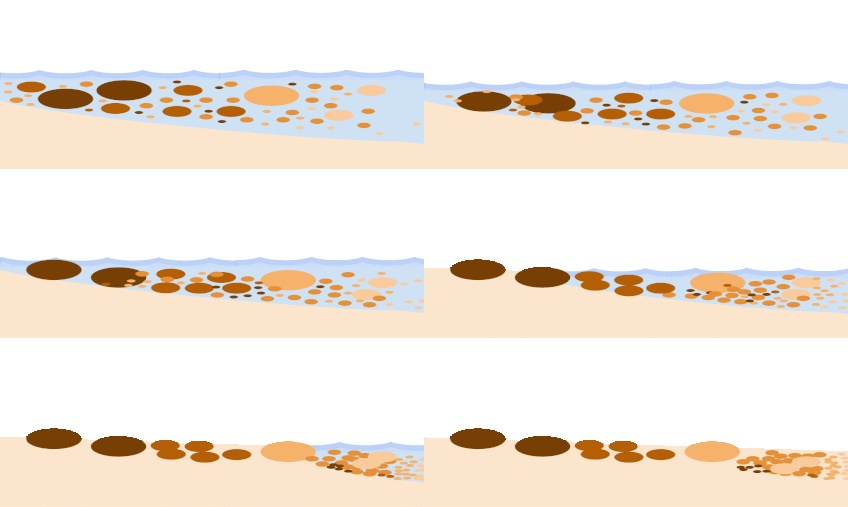
The particles aren’t sinking like they were in gold panning, they’re being carried along by moving water. They will be dropped off when water starts moving slow enough that it can’t hold onto the particle anymore.
Picture
This has to do with kinetic energy, which, as you learned in Chemistry, is just a fancy way of saying “the energy that something has when it is moving.” The faster something is moving, the more kinetic energy it has. The faster water is moving, the more kinetic energy it has. The more kinetic energy something has, the better it can hold onto big, dense, heavy stuff. That’s right, I said heavy. And I don’t mean dense. I mean massive. Something that weighs a lot. Kinetic energy is all about mass and velocity (speed). If the speed of the water is not high enough to pull away the heavy stuff from the shore, that heavy stuff gets deposited. So, heavy stuff gets deposited farthest inland, where the water is fasted, and small stuff gets deposited farther out to sea, where water is slowest.

This video will recap what I just said:

And that is everything you need to know about particle sorting! If you can keep straight what happens under what conditions, and even better why it happens, then you’re gold! (And therefore you will sink rapidly….)​

Summary

You should understand:
  • How and why the deposition of sediments at riverbeds and on shorelines is different from particle sorting in still water: deposition on shorelines has to do with what water is able to carry away based on its kinetic energy, and particle sorting in still water has to do with buoyant force.
  • That the largest, densest particles will be found furthest upshore and the smallest, least dense particles will be carried further out to sea.

Learning Activity

Picture
Lesson 15: The Atmosphere
lesson 14: particle sorting eis

Content contributors: Alan Li, Emma Moulton
© COPYRIGHT 2020. ALL RIGHTS RESERVED.